


.png)

Educational Disclosure: This article provides general educational information only and is not financial, investment, legal, tax, insurance, or pension advice. State Employee Advisor Network is a marketing and referral platform operated by Revenx LLC. It is not a registered investment adviser or broker-dealer and does not provide retirement-planning or investment advice. Any individualized advice or recommendation must come solely from an appropriately licensed or registered independent professional.
Retirement income planning involves organizing information about the income, benefits, savings, taxes, and expenses that may apply after employment ends.
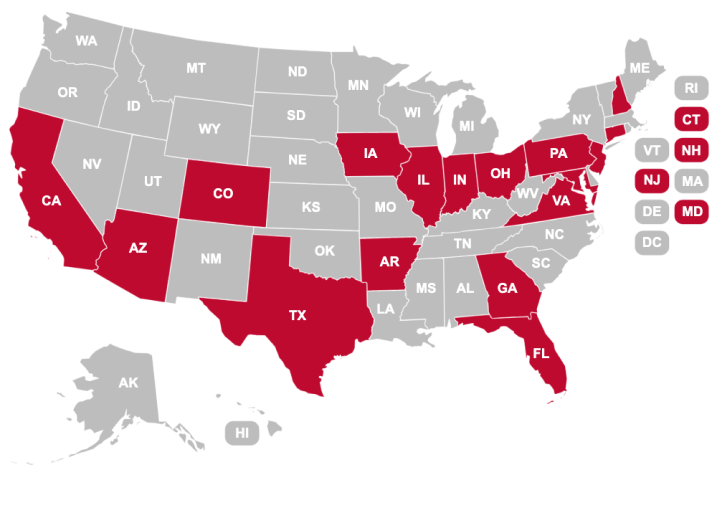
For New Hampshire state employees, relevant resources may include a New Hampshire Retirement System pension, the State’s 457(b) Deferred Compensation Plan, Social Security when eligible, personal retirement accounts, insurance benefits, and other household income.
Each source operates under different rules. A pension may provide recurring monthly income, while a retirement account generally provides assets that remain subject to account provisions, taxes, fees, and investment results.
This guide explains how these resources may relate to retirement income. It does not recommend a retirement date, pension election, investment strategy, contribution amount, withdrawal method, or Social Security claiming age.
NHRS was established as a contributory defined benefit plan and provides retirement, disability, and death benefits under the applicable laws and plan provisions.
Retirement income planning is the process of organizing information about expected income, expenses, taxes, benefits, and financial accounts after employment ends.
For a New Hampshire state employee, possible income sources may include:
The purpose of reviewing these sources is to understand what income may be available, when it may begin, how long it may continue, and which assumptions require confirmation.
A retirement-income estimate does not establish that an employee is financially prepared to retire. Retirement eligibility and retirement-income sufficiency are separate questions.
The New Hampshire Retirement System is a public employee defined benefit plan.
Unlike an individual investment account, a defined benefit pension generally calculates retirement benefits under a statutory formula. Depending on the employee’s membership classification and applicable rules, relevant factors may include service credit, compensation history, age, retirement type, and employment dates.
NHRS materials identify several retirement categories, including service, early service, vested deferred, and disability retirement benefits. The category available to a particular employee depends on the employee’s membership status and plan provisions.
Eligible employees may also participate in the State of New Hampshire 457(b) Public Employees Deferred Compensation Plan. The State describes this account as a way to save in addition to an NHRS pension and Social Security, when eligible. Contributions may be made on a tax-deferred or Roth basis under the plan’s terms.
Official NHRS estimates, State benefit materials, and individual account statements should be used to confirm which benefits and accounts apply.
An NHRS pension may provide recurring monthly income under the applicable plan provisions.
Information that may be relevant includes:
An official pension estimate may be compared with expected household expenses and other possible income sources.
For example, an employee may be eligible to begin a pension but still need additional information about healthcare costs, taxes, debt payments, Social Security, or retirement-account distributions. Eligibility alone does not show whether the pension will cover all household expenses.
Depending on eligibility and household circumstances, retirement income may come from several sources.
Not every source applies to every employee. Account balances, eligibility rules, taxes, benefit elections, household expenses, and the timing of distributions can affect the amount available.
Life insurance or survivor benefits may also provide money to beneficiaries after a covered person’s death, but they should not be treated as the employee’s regular retirement income.
The State’s governmental 457(b) plan is a supplemental retirement account rather than part of the NHRS defined benefit pension.
Account information that may be reviewed includes:
The value of the account depends on contributions, withdrawals, fees, and investment performance. Growth is not guaranteed.
The availability of tax-deferred and Roth contributions does not mean that either contribution type is appropriate for every employee. Their tax treatment differs, and individual tax consequences depend on the employee’s circumstances and applicable law.
Any recommendation concerning investments, account allocation, contribution amounts, rollovers, Roth decisions, or distributions must come from an appropriately authorized independent professional.
Social Security may be part of retirement income for eligible New Hampshire public employees.
Relevant information may include:
Social Security retirement benefits may begin as early as age 62. Starting before full retirement age generally reduces the monthly benefit. Delaying benefits beyond full retirement age may increase the benefit through delayed retirement credits, with increases ending at age 70.
The effect of starting benefits at a particular age depends on the individual’s record and circumstances. This article does not recommend a Social Security claiming age.
An employee can review an official Social Security record to confirm covered earnings and available estimates.
Healthcare-related expenses can continue or change after employment ends.
Possible costs include:
Coverage and costs can vary based on employment classification, retirement status, eligibility, plan selection, age, and future benefit provisions.
The State of New Hampshire provides information about post-employment health-benefit plans available to transitioning state employees. Current eligibility requirements and plan documents should be reviewed before relying on a particular form or level of coverage.
A healthcare estimate is still an assumption. Premiums, medical needs, coverage rules, and out-of-pocket expenses can change during retirement.
Inflation can reduce purchasing power when the cost of goods and services increases.
A retirement-income review may identify:
Inflation may affect housing, food, transportation, insurance, healthcare, and other household expenses differently.
An inflation assumption does not predict future costs or determine how retirement assets should be invested. It is one variable that may be included when comparing estimated future income with expenses.
Retirement information may be organized by recording the amount, starting date, duration, tax treatment, and level of uncertainty associated with each source.
This information can help identify missing records or assumptions. It does not determine how much should be withdrawn from an account or which investments should be selected.
A retirement-income review may be incomplete when it does not include:
Another common gap is using gross benefit estimates without considering deductions, withholding, insurance premiums, or other expenses.
The information should also be reviewed for consistency. A retirement date used in a pension estimate may differ from the date assumed in a Social Security estimate or household budget.
Retirement income planning in New Hampshire may involve an NHRS pension, the State 457(b) plan, Social Security when eligible, personal savings, healthcare benefits, taxes, and household expenses.
Retirement income planning in New Hampshire may involve an NHRS pension, the State 457(b) Plan, Social Security when eligible, personal savings, healthcare benefits, taxes, and household expenses.Reviewing official benefit estimates, service records, account statements, Social Security records, beneficiary information, and current plan documents can help establish an accurate starting point.
If you would like to discuss your retirement planning considerations in more detail, you can schedule an appointment to review your current benefits and available retirement planning options. This article does not recommend a retirement date, pension option, Social Security claiming age, contribution amount, investment strategy, account withdrawal, insurance product, or tax approach.
No. A retirement-income review may also include Social Security when eligible, the State 457(b) plan, personal accounts, savings, healthcare costs, taxes, and other household income.
Eligible employees may have access to the State of New Hampshire 457(b) Public Employees Deferred Compensation Plan. Participation, contributions, investments, fees, and distributions are governed by the plan’s terms.
Eligibility depends on the person’s Social Security-covered earnings record. Employees can confirm their covered earnings and estimates through their official Social Security account.
Starting retirement benefits before full retirement age generally reduces the monthly amount. Delaying beyond full retirement age may increase it until age 70. The effect depends on the individual’s earnings record.
Inflation can reduce purchasing power when expenses rise. Actual inflation, benefit adjustments, spending, and investment results cannot be predicted through a general estimate.
No. State Employee Advisor Network is a marketing and referral platform operated by Revenx LLC. It is not a registered investment adviser or broker-dealer and does not provide retirement, pension, financial-planning, investment, legal, tax, or insurance advice.
Any individualized service, analysis, advice, or recommendation must come solely from an independent third-party professional.

Jeremy contributes regularly to State Employee Advisor Network. With a deep understanding of state pension systems and public-sector benefits, he offers readers insights and strategies to optimize their retirement outcomes.



State Employee Advisor Network is a marketing and referral platform operated by Revenx LLC. We connect consumers with independent, licensed financial professionals. We are not a registered investment adviser, broker-dealer, or insurance agency, and we do not provide investment, legal, or tax advice.
All financial services are provided solely by third-party professionals. Revenx LLC receives compensation from financial professionals for marketing and referral services, which may create a financial incentive to refer individuals to participating professionals. Users should independently evaluate any financial professional before engaging their services.
.png)
.png)

.jpg)