


.png)
Educational Disclosure: This article is provided for general educational purposes only. It does not constitute financial, investment, real-estate, tax, legal, insurance, healthcare, or retirement advice. State Employee Advisor Network is a marketing and referral platform operated by Revenx LLC. SEAN does not rank retirement communities, recommend real estate, evaluate properties, or guarantee the affordability, safety, healthcare quality, or suitability of any Florida location. Individualized services are provided solely by independent third-party professionals.
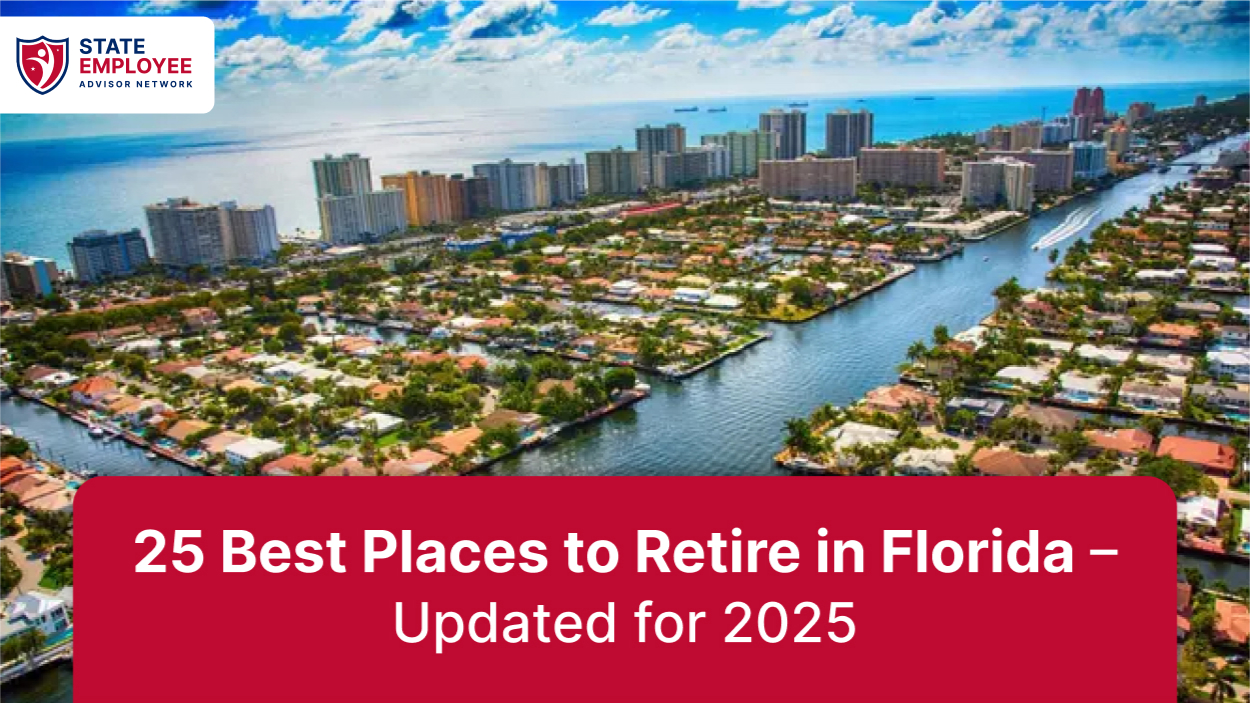
Florida remains a widely considered retirement destination because of its climate, coastline, recreational opportunities, and lack of an individual state income tax.
However, there is no universally best place to retire in Florida.
A location that works well for a retiree seeking beaches and cultural attractions may not suit someone prioritizing lower housing costs, hurricane exposure, public transportation, family proximity, or specialist healthcare.
This guide presents 25 Florida locations worth comparing. The list is not an objective ranking, and placement does not indicate that one location is financially safer or more appropriate than another.
Before relocating, compare the specific neighborhood rather than relying only on citywide descriptions.
A Florida retirement-location review can include:
Florida does not impose an individual state income tax, but that does not make every Florida location inexpensive. Housing, insurance, association fees, utilities and healthcare can materially affect the total budget. Recent reporting also highlights rising insurance costs, condominium reserve requirements and special assessments as expenses potential residents should investigate.
May appeal to: Retirees seeking Gulf Coast beaches, cultural attractions and an active arts community.
Sarasota offers access to theatres, museums, restaurants, parks and beaches in the surrounding county. It may suit people who want cultural activity without living in one of Florida’s largest metropolitan areas.
Potential trade-offs include housing costs, traffic during the seasonal-resident period, insurance expenses and storm exposure.
Compare downtown Sarasota, mainland neighborhoods and barrier-island areas separately because housing, flood exposure and accessibility can differ significantly.
May appeal to: Retirees prioritizing Gulf Coast living, golf, dining and higher-end amenities.
Naples is commonly associated with beaches, boating, golf and an upscale lifestyle. It can provide access to cultural institutions, shopping and medical services within the broader Collier County area.
The main limitation for many households is cost. Housing, association charges, insurance and property-related expenses can be considerably different from inland Florida communities.
A Naples address does not automatically mean beach access, low flood risk or walkability. Review the exact property and evacuation zone.
May appeal to: Retirees seeking Central Florida access without living directly in Tampa or Orlando.
Lakeland is positioned between the Tampa Bay and Orlando metropolitan areas. The city offers lakes, parks, local events, shopping and access to regional highways.
It may provide a different housing-cost profile from Florida’s better-known coastal destinations, but affordability depends on the property, insurance, taxes and ongoing maintenance.
People comparing local earnings and living costs can also review the Polk County, Florida teacher salary guide. Salary data should not be treated as a direct measure of retiree affordability.
May appeal to: Retirees interested in inland living, equestrian culture and access to outdoor recreation.
Ocala offers a historic downtown, horse-country surroundings and proximity to forests, springs and trails. It is often compared with coastal locations by retirees who prefer more distance from the shoreline.
Inland location does not eliminate severe-weather, insurance or heat-related concerns. Transportation can also be car-dependent, particularly outside the central city.
Review proximity to hospitals and specialists when considering outlying communities.
May appeal to: Retirees who value university-related healthcare, education and cultural activity.
Gainesville is home to the University of Florida and has a college-town environment with museums, sporting events, nature areas and healthcare facilities.
The city may suit retirees seeking lifelong-learning opportunities and access to a large academic medical system.
Possible drawbacks include student-related traffic, humid summers and differences in convenience between central Gainesville and more rural parts of Alachua County.
May appeal to: Retirees seeking an age-restricted environment with extensive organized activities.
The Villages is a large master-planned retirement area spanning parts of Central Florida. It is known for recreation centers, clubs, golf-cart transportation, entertainment and organized social activities.
Potential residents should examine:
A highly active community can appeal to some retirees but may feel too structured or geographically isolated to others.
May appeal to: Retirees seeking Southwest Florida amenities and access to Gulf Coast recreation.
Fort Myers provides restaurants, arts, shopping, boating and access to surrounding coastal areas. Housing choices range from urban condominiums to suburban and gated developments.
The region’s hurricane history makes insurance, flood zones, building standards and evacuation planning especially important.
Do not confuse Fort Myers with Fort Myers Beach. They are separate communities with different rebuilding, insurance and coastal-exposure considerations.
May appeal to: Retirees interested in history, architecture and Northeast Florida coastal access.
St. Augustine offers historic sites, restaurants, events, galleries and access to nearby beaches. Its smaller-city setting may appeal to retirees who want a distinctive downtown rather than a large metropolitan environment.
Tourist traffic, parking, flood exposure and housing costs can vary by neighborhood.
Historic charm does not automatically translate into accessibility. Review stairs, sidewalks, parking and medical transportation when mobility is a concern.
May appeal to: Retirees seeking planned suburban neighborhoods on Florida’s Treasure Coast.
Port St. Lucie offers parks, golf, waterways, shopping and residential communities between Orlando and South Florida.
The city is spread out, so access to healthcare, shopping and recreation depends heavily on the selected neighborhood. A car may be necessary for many daily activities.
Compare homeowners association charges, property insurance and hurricane exposure before purchasing.
May appeal to: Retirees interested in newer construction, community planning and sustainability features.
Babcock Ranch is a planned community in Southwest Florida known for solar infrastructure, trails, lakes and newer residential development.
New construction does not remove every financial or environmental risk. Buyers should examine:
Its distance from established urban centers may be an advantage for some residents and a drawback for others.
May appeal to: Retirees seeking newer suburban development near Tampa.
Wesley Chapel provides shopping, healthcare facilities, restaurants and access to the broader Tampa Bay region. It may appeal to retirees who prefer suburban housing over dense coastal living.
Growth has also brought traffic and continued construction. Walkability varies substantially, and many neighborhoods require a car.
Compare travel time to specialists, airports and family rather than judging the area only by its distance from Tampa.
May appeal to: Retirees seeking Panhandle beaches and planned coastal communities.
Watersound and nearby communities provide access to beaches, trails, resort amenities and Northwest Florida recreation.
Potential limitations include seasonal tourism, hurricane exposure, insurance costs and distance from major medical centers.
Some developments are highly structured and may carry association, club or community fees. Obtain the full fee schedule and governing documents before making a commitment.
May appeal to: Retirees seeking a developing suburban area between Tampa Bay and Sarasota.
Parrish combines newer housing development with access to Manatee County and the Interstate 75 corridor.
Rapid development can affect traffic, public infrastructure, insurance and future property-tax costs. Healthcare and shopping access may improve as the area grows, but they can vary by neighborhood.
Prospective residents should evaluate both current amenities and approved future construction.
May appeal to: Retirees interested in waterways, boating and a smaller Southwest Florida community.
Port Charlotte offers canals, boating access, parks and proximity to Punta Gorda and Gulf Coast recreation.
Housing may appear less expensive than in some nearby coastal markets, but storm history, roof condition, flood zones and insurance can materially change ownership costs.
A lower purchase price should not be evaluated separately from repairs, premiums and deductibles.
May appeal to: Retirees seeking a large planned community near Sarasota and Bradenton.
Lakewood Ranch includes shopping districts, parks, restaurants, medical facilities and multiple residential developments.
Its planned environment can offer convenience, but fees, restrictions and home prices differ among neighborhoods.
Review the exact development’s association structure, community development district charges and distance to the services most frequently used.
May appeal to: Retirees seeking Atlantic Coast access between St. Augustine and Daytona Beach.
Palm Coast offers trails, parks, golf, waterways and access to beaches in Flagler County.
It has a suburban layout and may require regular driving. Storm exposure, flood zones and property insurance vary between inland and coastal sections.
People who expect frequent specialist care should compare local options with those available in Jacksonville, Daytona Beach or Orlando.
May appeal to: Retirees seeking a smaller Gulf Coast community and outdoor recreation.
Englewood spans parts of Charlotte and Sarasota counties and provides access to beaches, fishing, boating and nature areas.
Its quieter environment may appeal to retirees who do not need extensive urban amenities. However, healthcare choice, transportation and storm exposure should be reviewed.
County boundaries can affect taxes, utilities and services even when two properties share an Englewood mailing address.
May appeal to: Retirees seeking South Florida access without living directly in Miami.
Boynton Beach is located between West Palm Beach and Boca Raton. It offers beaches, shopping, restaurants, medical services and many condominium or age-restricted developments.
South Florida housing and association expenses can be significant. Older condominium buildings may face inspections, reserve requirements and special assessments.
Review the building’s financial records, insurance, engineering reports and reserve funding rather than relying only on the unit price.
May appeal to: Retirees who place a high priority on island and beachfront living.
Fort Myers Beach offers direct Gulf access, boating and a tourism-oriented coastal environment.
It also presents substantial hurricane, rebuilding, flood, evacuation and insurance considerations. Infrastructure and property conditions can change over time.
This location should not be treated as interchangeable with inland Fort Myers. Buyers should verify current rebuilding status, access, utilities and insurability for the specific property.
May appeal to: Retirees interested in lakefront recreation and a smaller Central Florida city.
Tavares sits in Lake County and provides access to boating, fishing and nearby communities such as Mount Dora and Leesburg.
It may suit people who prefer inland lakes to coastal beaches. Transportation remains important because specialist care and larger regional services may require travel.
Waterfront property should still be reviewed for flood exposure and insurance.
May appeal to: Retirees seeking a smaller Gulf Coast city with a defined downtown.
Venice offers beaches, parks, events, cycling routes and access to Sarasota County healthcare and amenities. Recent retirement coverage has highlighted its walkable central area and high proportion of older residents.
Housing costs and storm exposure remain relevant. Downtown, mainland, island and suburban Venice can provide very different experiences.
Seasonal traffic and insurance should be included in the comparison.
May appeal to: Retirees prioritizing outdoor recreation, lower-density communities and a slower pace.
Florida’s Nature Coast generally refers to parts of the Gulf Coast north of Tampa, including areas associated with springs, rivers, wildlife and fishing.
It is a region rather than one municipality. Healthcare, transportation, housing and storm exposure can vary significantly from one county to another.
More rural surroundings can offer space and lower density but may also mean longer drives to hospitals, airports and specialist care.
May appeal to: Retirees seeking a long-established age-restricted community near Tampa Bay.
Sun City Center is known for clubs, recreation and services designed around an older population.
Before moving, compare:
An age-restricted community can support social activity, but residents should still consider access to family, transportation and long-term care.
May appeal to: Retirees seeking suburban living between Jacksonville and St. Augustine.
The St. Johns area includes growing residential communities with access to Northeast Florida healthcare, airports, shopping and beaches.
The area is not a single incorporated city, so taxes, services, addresses and school-district descriptions can be confusing.
Rapid growth may affect traffic and development density. Review the specific community rather than relying on general county-level descriptions.
May appeal to: Retirees seeking access to The Villages region without necessarily choosing its central neighborhoods.
Lady Lake offers access to shopping, recreation and medical services associated with the broader retirement region.
Property arrangements differ inside and outside The Villages. Community fees, deed restrictions and available amenities should be verified for the exact address.
A Lady Lake mailing address does not necessarily include access to every amenity associated with The Villages.
Locations to compare include Sarasota, Venice and Naples.
These areas may provide strong lifestyle amenities but can involve higher coastal insurance and housing expenses.
Locations to compare include Ocala, Lakeland, Gainesville and Tavares.
Inland areas may reduce direct storm-surge exposure but remain subject to wind, flooding, heat and insurance costs.
The Villages, Sun City Center and age-restricted developments within other cities may be relevant.
Review restrictions, fees and long-term property obligations.
Gainesville may merit consideration because of its university and academic healthcare environment.
Other metropolitan areas may provide a broader range of specialists, but access depends on the specific provider network and insurance plan.
Palm Coast, St. Augustine, Port St. Lucie and Boynton Beach offer different combinations of beach access, suburban development and regional amenities.
Storm and flood exposure should be reviewed property by property.
Florida does not impose an individual state income tax. As a result, it does not levy state individual income tax on Social Security, pensions or retirement-account withdrawals.
Federal income tax may still apply. Taxes in another state may also apply when residency is not clearly established or when income has another taxable connection.
Florida residents may qualify for homestead-related property-tax benefits when legal requirements are met. These benefits are not automatic for every property or every older resident.
The absence of state income tax should be compared with:
No Florida city is free from weather risk.
Before buying or renting, investigate:
Obtain actual insurance quotes before completing the purchase. A seller’s current premium may not be available to a new owner.
Condominium buyers should also examine inspections, reserves, board minutes, pending litigation and announced special assessments.
A short vacation may not reveal what daily life is like.
Consider visiting during:
Test ordinary activities such as:
Renting before buying may provide more time to understand the area, but it has separate financial and availability considerations.
State Employee Advisor Network is a marketing and referral platform operated by Revenx LLC. We connect consumers with independent, licensed financial professionals.
SEAN does not provide real-estate advice, relocation services, retirement planning, investment advice, pension advice, tax advice, legal advice, insurance advice or healthcare advice.
Professionals participating in the network are independent third parties. They are not employees or representatives of SEAN. All services, analysis, guidance and recommendations come solely from the professional.
The introduction is free to consumers. Revenx LLC receives compensation from participating professionals for marketing and referral services. This creates a financial incentive to refer consumers to participating professionals.
Consumers should independently evaluate each professional’s licensing, registrations, experience, services, fees, compensation, conflicts of interest and disciplinary history.
Readers can review the Florida retirement-planning referral page.
Schedule a free introduction to an independent professional.
Florida offers coastal cities, inland towns, university communities, master-planned developments and age-restricted neighborhoods.
No location is universally best.
A useful comparison includes housing, insurance, flood and hurricane exposure, healthcare, transportation, taxes, community fees and proximity to family.
The city name is only the starting point. Conditions can differ significantly among neighborhoods, buildings and individual properties.
Before relocating, verify current costs, insurance availability, property condition and medical access using official records and property-specific information.
There is no universally best region. Gulf Coast communities may appeal to beach and cultural interests, Central Florida may offer inland or planned-community options, and Northeast Florida may provide access to Jacksonville and historic coastal areas.
Ocala, Lakeland, Gainesville, Port Charlotte and parts of the Nature Coast may be worth comparing with higher-cost coastal markets. Current housing, insurance and healthcare costs must be verified.
Florida does not impose an individual state income tax. Federal taxes, property taxes, insurance, sales taxes and other living expenses still apply.
It may be, but coastal properties can face flood, hurricane, evacuation and insurance risks. Review the specific property rather than relying on a citywide description.
The Villages is widely recognized as one of the country’s largest age-restricted retirement developments. Population figures vary depending on whether the broader census area, development or connected communities are measured.
The answer depends on preferences, restrictions, fees, amenities, property condition and long-term plans. Review governing documents and total ownership costs before purchasing.
No. Inland locations can still experience hurricane winds, rainfall, flooding, tornadoes and power outages, although direct storm-surge exposure may be lower.
Review association finances, reserves, insurance, inspections, pending assessments, board minutes, litigation, flood exposure and the individual unit’s condition.
Jeremy contributes regularly to State Employee Advisor Network. With a deep understanding of state pension systems and public-sector benefits, he offers readers insights and strategies to optimize their retirement outcomes.



State Employee Advisor Network is a marketing and referral platform operated by Revenx LLC. We connect consumers with independent, licensed financial professionals. We are not a registered investment adviser, broker-dealer, or insurance agency, and we do not provide investment, legal, or tax advice.
All financial services are provided solely by third-party professionals. Revenx LLC receives compensation from financial professionals for marketing and referral services, which may create a financial incentive to refer individuals to participating professionals. Users should independently evaluate any financial professional before engaging their services.
.png)
.png)

.jpg)