

.png)

If you are a state employee in your 50s, three retirement pieces are still flexible: your defined-benefit state pension, your 457(b) Deferred Compensation Plan, and your Social Security benefit. This guide explains how to coordinate them and what to do in the decade before you retire.
After age 60, some planning options narrow. Others, such as higher catch-up contribution opportunities, may become newly available depending on your plan and age.
This guide is written for the teacher, corrections officer, agency analyst, or department manager who is within 5 to 15 years of retirement. It covers catch-up contribution rules for public-sector workers and the five steps that meaningfully change your retirement income.
Investment planning for state employees in their 50s coordinates three things: your state pension benefit, your 457(b) Deferred Compensation Plan contributions, and your Social Security strategy. The result is a single retirement income plan.
This work differs from private-sector planning. State employees usually have a defined-benefit pension as the foundation of retirement income, not a 401(k).
In your 50s, this planning becomes urgent for three reasons. Catch-up contributions unlock at age 50. Pension projections become reliable once you have enough years-of-service data.
You also still have time to fix shortfalls. A 65-year-old does not.
Every major retirement decision becomes either available or refined during this window. Catch-up contributions unlock, pension projections become reliable, and Social Security claiming strategy can be modeled with real numbers instead of guesses.
A 25-year-old has time but no data. A 65-year-old has data but limited time to act. State employees in their 50s have both, and that combination only exists for about ten years.
According to the Internal Revenue Service (IRS), employees aged 50 and over can make catch-up contributions to workplace retirement plans, including 457(b) plans. This benefit is not available to younger workers.
The first step is to get an accurate benefit estimate from your state pension system. Most state retirement boards offer an online benefit calculator, an annual statement, or a one-on-one counseling appointment. Use all three.
You need to know four things:
Plan name varies by state. Your state pension system may be called a Public Employees' Retirement System, Employees' Retirement System, State Retirement System, or Teachers' Retirement System, depending on your state and job type. Confirm the exact name and acronym with your state retirement board.
Once you have these four numbers, you can project your pension at multiple retirement ages. That projection determines how much your 457(b) and Social Security need to cover.
Consider a state employee with 25 years of service, a 1.5% benefit multiplier, and a $60,000 final average salary. The annual pension is 25 × 1.5% × $60,000, which equals $22,500 per year, or $1,875 per month. Your own multiplier and FAS will produce a different figure.
The 457(b) Deferred Compensation Plan is a tax-advantaged supplemental retirement savings program available to state and local government employees. For many public workers, increasing 457(b) contributions can be one of the highest-impact planning moves available.
According to the IRS, the 2026 elective deferral limit for 457(b) plans is $24,500 for the 2026 plan year. Participants aged 50 and over may add an Age 50 catch-up contribution of $8,000. Participants aged 60 to 63 may add a higher catch-up of $11,250 in place of the Age 50 catch-up.
State employees aged 50 and over can use one of several 457(b) catch-up contribution provisions, but generally not more than one in the same year. The Age 50 catch-up adds a fixed amount above the standard limit, and a higher catch-up is available to participants ages 60 to 63.
The Special 457(b) Catch-Up, sometimes called the "three-year rule," is available in the three years before your plan's normal retirement age and can be significantly larger.
According to the IRS, a participant generally cannot use both the Age 50 catch-up and the Special 457(b) Catch-Up in the same year. Most plans require an election form filed with your plan administrator. The Special Catch-Up has strict eligibility requirements tied to under-contributions in prior years, so confirm eligibility before electing it.
Table 1. 457(b) annual contribution limits by catch-up provision for the 2026 plan year.
Source: Internal Revenue Service, 2026 plan year limits.
State employees in their 50s often have access to multiple retirement accounts beyond the 457(b). These can include a 403(b) if you work in education, a Roth IRA, a Traditional IRA, or a spouse's 401(k). Coordinating these accounts matters more than maxing any one of them.
A 457(b) and a 403(b) have separate contribution limits. According to the IRS, an employee with access to both plans can contribute the maximum to each in the same year.
This can be a meaningful advantage. Most private-sector workers do not have access to both types of plans at the same time.
The general priority order for state employees in their 50s is:
This order shifts based on income, marginal tax bracket, and whether you expect to be in a higher or lower bracket in retirement. The decision is rarely obvious without modeling.
The Social Security Fairness Act was signed into law on January 5, 2025. It ended the Windfall Elimination Provision (WEP) and the Government Pension Offset (GPO).
State employees in their 50s may wish to understand how these changes could affect their projected Social Security benefits. An independent professional can discuss how the updated rules may apply to an individual's retirement planning considerations.
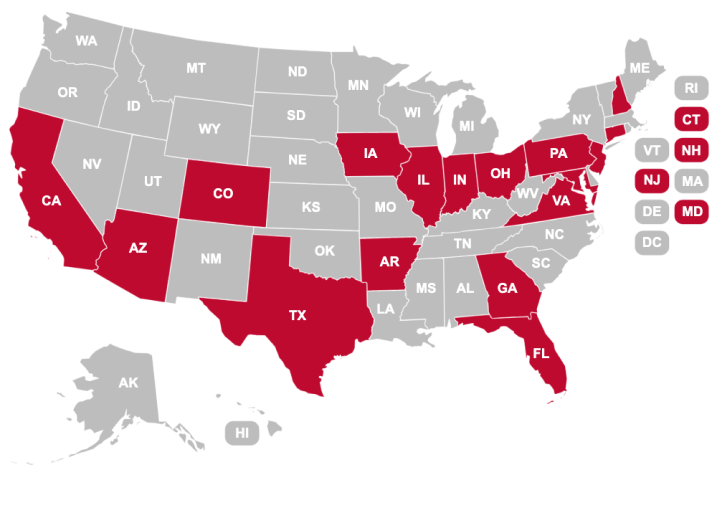
WEP, the Windfall Elimination Provision, was the Social Security rule that had previously reduced retirement benefits for workers who received a pension from non-Social Security-covered employment. This included many state employee positions in roughly a dozen states.
GPO, the Government Pension Offset, was the rule that had previously reduced or eliminated spousal and survivor Social Security benefits for people receiving a non-covered government pension.
According to the Social Security Administration (SSA), the Social Security Fairness Act ended WEP and GPO. The SSA has been adjusting benefits for affected current and future retirees. For state employees in their 50s, several earlier planning assumptions need to be re-run:
Any retirement income plan built before 2025 that assumed a WEP or GPO reduction may need to be reviewed in light of the Social Security Fairness Act. An independent professional can help evaluate how these changes may affect your retirement strategy.
Retirement income planning for state employees converts your pension, 457(b), and Social Security into a coordinated monthly income stream. That income stream needs to cover expenses, taxes, and inflation. Saving more money is only half the work.
A retirement income plan answers four questions:
State Employee Advisor Network builds these income plans for clients in their 50s and 60s. A common finding in retirement planning conversations is that some state employees underestimate their tax burden in retirement. They assume a lower tax bracket, but the combination of pension, Social Security, and 457(b) withdrawals frequently keeps retirees in a similar bracket to their working years.
The most common investment planning mistakes for state employees in their 50s are predictable and avoidable. Each of these costs real money. Most are reversible if caught before retirement.
State Employee Advisor Network is a marketing and referral platform operated by Revenx LLC. We connect state and university employees with independent, licensed professionals who work with public-sector retirement systems. The independent professional you are matched with may discuss how your state pension, 457(b), and Social Security fit together based on your individual circumstances.
Depending on their licensing and your individual needs, the professional you meet with may discuss topics such as:
Depending on your circumstances, you may choose to discuss these planning considerations with an independent financial professional who understands state pension systems, 457(b) plans, and public-sector retirement benefits.
If you are within 5 to 15 years of retirement and want to know whether your current plan is on track, you can book an introductory appointment with a state-employee specialist.
The decade between 50 and 60 is when your pension, 457(b), and Social Security choices are most flexible. If you'd like to speak with an independent professional about your retirement planning questions, you can schedule a free introduction through State Employee Advisor Network.
Savings needs vary depending on factors such as your state pension, retirement goals, other retirement accounts, and overall financial circumstances. An independent professional can help evaluate your individual situation.
Yes. According to the IRS, 457(b) and 403(b) plans have separate contribution limits. An eligible state employee, most commonly in education, can fully fund both in the same year.
This can be a meaningful advantage, since many private-sector workers do not have access to both types of plans.
According to the IRS, the 2026 Age 50 catch-up contribution for 457(b) plans is $8,000 on top of the $24,500 standard limit, for a total of $32,500 per year. Participants ages 60 to 63 may instead contribute up to $35,750 using the higher catch-up. Those within three years of their plan's normal retirement age may qualify for the Special 457(b) Catch-Up.
Not necessarily. State employees already have a defined-benefit pension acting as a bond-like income floor in retirement.
Investment decisions depend on your individual financial situation, retirement goals, and risk tolerance. An independent professional can discuss these considerations with you.
No. According to the Social Security Administration, the Social Security Fairness Act was signed into law on January 5, 2025, and it ended both the Windfall Elimination Provision and the Government Pension Offset.
State employees with retirement income plans created before 2025 may benefit from reviewing their current Social Security statement and discussing any potential updates to their claiming strategy with an independent professional.
Unreduced retirement age varies by state, tier, and years of service.Verify your state's specific retirement eligibility rules and any "rule of" combinations, such as age plus years of service equaling a specific number, with your state retirement board. Retiring before this age usually triggers a permanent benefit reduction.
This article is provided for educational purposes only and does not constitute financial, investment, legal, or tax advice. State Employee Advisor Network is a marketing and referral platform operated by Revenx LLC. We do not provide financial or investment advice. We connect state and university employees with independent, licensed professionals. Any guidance is provided by the independent professional you choose to work with.

Jeremy contributes regularly to State Employee Advisor Network. With a deep understanding of state pension systems and public-sector benefits, he offers readers insights and strategies to optimize their retirement outcomes.



State Employee Advisor Network is a marketing and referral platform operated by Revenx LLC. We connect consumers with independent, licensed financial professionals. We are not a registered investment adviser, broker-dealer, or insurance agency, and we do not provide investment, legal, or tax advice.
All financial services are provided solely by third-party professionals. Revenx LLC receives compensation from financial professionals for marketing and referral services, which may create a financial incentive to refer individuals to participating professionals. Users should independently evaluate any financial professional before engaging their services.
.png)
.png)
.jpg)